


How Many Treatments Do You Really Need for Shock Wave Therapy to Work?

How Many Treatments Do You Really Need for Shock Wave Therapy to Work?
If you’re considering shock wave therapy for pain relief, one of the first questions you probably have is:
“How many treatments will I actually need before I feel better?”
That’s a fair question. Most people dealing with chronic pain have already tried stretching, medications, injections, physical therapy, or even rest — often with limited success. When you start something new, you want to know what to expect.
The short answer is this:
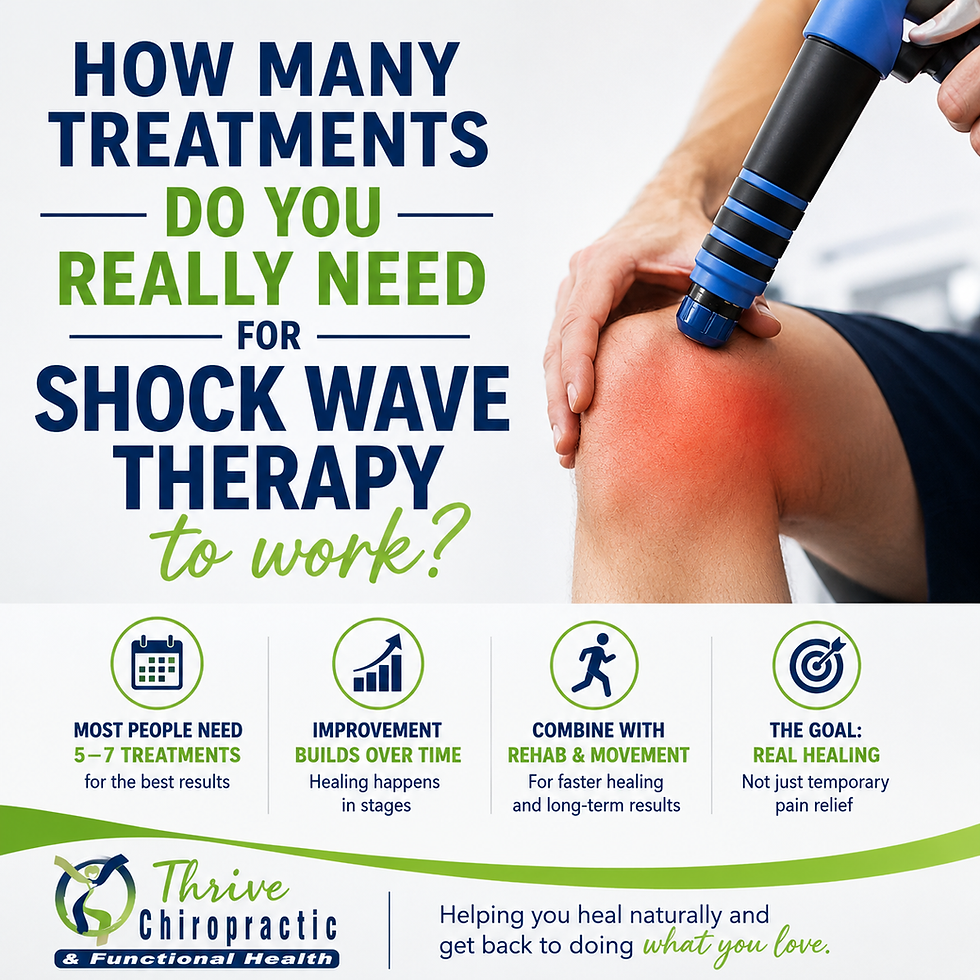
Most people need between 5–7 shock wave therapy treatments to get the best results.
But the real answer depends on several important factors, including:
How long you’ve had the problem
The severity of tissue damage
Your age and activity level
The condition being treated
Whether the treatment is combined with proper rehab and movement
At Thrive Chiropractic & Functional Health, we use Acoustic Wave Therapy as part of a complete treatment approach designed to help the body heal naturally.
Why Shock Wave Therapy Usually Requires Multiple Treatments
Shock wave therapy works differently than treatments designed to simply “cover up” pain.
Instead of masking symptoms, Acoustic Wave Therapy stimulates your body’s natural healing response by:
Increasing circulation
Reducing inflammation
Breaking up damaged scar tissue
Stimulating cellular repair
Encouraging collagen production
Improving tissue regeneration
This process takes time.
Think about it this way:If a tendon, ligament, or fascia has been irritated for months — or even years — it usually will not fully recover after one visit.
Healing happens in stages.
That’s why treatments are typically spaced about 5–10 days apart to allow the body time to respond between sessions.
When Do Most People Start Feeling Better?
Many patients notice some improvement after the first 1–3 treatments.
Common early changes include:
Reduced pain
Less stiffness
Better mobility
Improved sleep
Easier walking or exercise
Less pain with daily activities
However, the biggest improvements usually happen after several treatments, as the healing process builds over time.
This is especially true for chronic conditions like:
Plantar fasciitis
Shoulder tendinopathy
Tennis elbow
Achilles tendinitis
Chronic knee pain
Hip pain
Lower back pain
Why Some People Need More Treatments Than Others
Not all injuries heal at the same speed.
For example:
A mild condition that started 2 months ago may improve quickly.
A tendon problem that has existed for 5 years may need additional care.
People with chronic inflammation, scar tissue buildup, or significant degeneration often require more treatments because the body needs more stimulation to restart the healing process.
Other factors that may affect healing include:
Poor sleep
High stress
Smoking
Diabetes
Poor nutrition
Lack of movement
Repetitive overuse
What Does the Research Say?
Research on shock wave therapy consistently shows that multiple treatments produce better outcomes than a single session.
Studies involving chronic tendon pain and plantar fasciitis commonly use treatment plans involving:
3–7 sessions
Weekly or biweekly treatments
Gradual improvement over 6–12 weeks
Researchers have found that healing often continues even after the treatment series is complete because the therapy stimulates long-term tissue remodeling.
In other words:The goal is not temporary pain relief — the goal is actual healing.
Why Combining Shock Wave Therapy With Rehab Matters
One of the biggest mistakes people make is assuming shock wave therapy alone does all the work.
The best outcomes usually happen when treatment is combined with:
Corrective exercises
Mobility work
Strength training
Chiropractic care
Activity modification
Proper recovery strategies
At Thrive Chiropractic & Functional Health, we often combine Shock Wave Therapy with targeted movement and rehabilitation strategies to help patients recover faster and stay active longer.
So… How Many Treatments Do You Really Need?
While every case is different, here is a general guideline:
Mild conditions: 3–5 treatments
Moderate chronic pain: 5–7 treatments
Severe or long-standing problems: 8+ treatments
The good news is that treatment sessions are typically quick, non-invasive, and require little to no downtime.
Final Thoughts
If you’re frustrated with chronic pain and wondering whether shock wave therapy is worth trying, the most important thing to understand is this:
Healing is a process — not a one-time event.
Most people need a series of treatments to allow the body enough time to repair damaged
tissue and calm chronic inflammation.
The goal is not simply to feel better for a few hours or days.
The goal is to help your body heal so you can get back to walking, exercising, sleeping, working, and living without constant pain.
If you want to learn whether Shock Wave Therapy may be right for your condition, schedule a Complimentary Pain Relief Consultation today by clicking the button below.
You can also call the office at (417) 545-3635.
Frequently Asked Questions:
How many shock wave therapy treatments will I need?
Most patients need between 5–7 treatments depending on the severity and duration of their condition.
How quickly does shock wave therapy work?
Some patients notice improvement after 1–3 treatments, but the biggest improvements often occur after completing the full treatment plan.
Does shock wave therapy permanently fix pain?
Shock wave therapy is designed to stimulate healing, not just mask pain. Results vary depending on the condition and overall health of the patient.
Is shock wave therapy painful?
Most patients tolerate treatment well. Some mild discomfort during treatment is normal, especially in injured tissue.
What conditions respond best to shock wave therapy?
Shock wave therapy is commonly used for plantar fasciitis, tendonitis, shoulder pain, hip pain, knee pain, tennis elbow, and chronic soft tissue injuries.
This information should not be substituted for medical or chiropractic advice. Any healthcare concerns, decisions, and actions must be made through the advice and counsel of a healthcare professional familiar with your updated medical history.


Comments